How to practice an interview answer without sounding rehearsed
Learn how to practice interview answers so you sound prepared, present, and like yourself when the conversation takes an unexpected turn.

At 7:42 on a Tuesday morning, Andre Whitaker sat at the edge of his bed with one shoe on and a video interview open on his laptop. He had practiced his answer about handling conflict so many times that the first sentence came out perfectly. The second sounded like it had been printed on a cue card.
How do you practice interview answers without sounding rehearsed? You practice the idea, not every word. Build a small set of honest points, say them in different ways, and leave room to respond to the actual question in front of you.
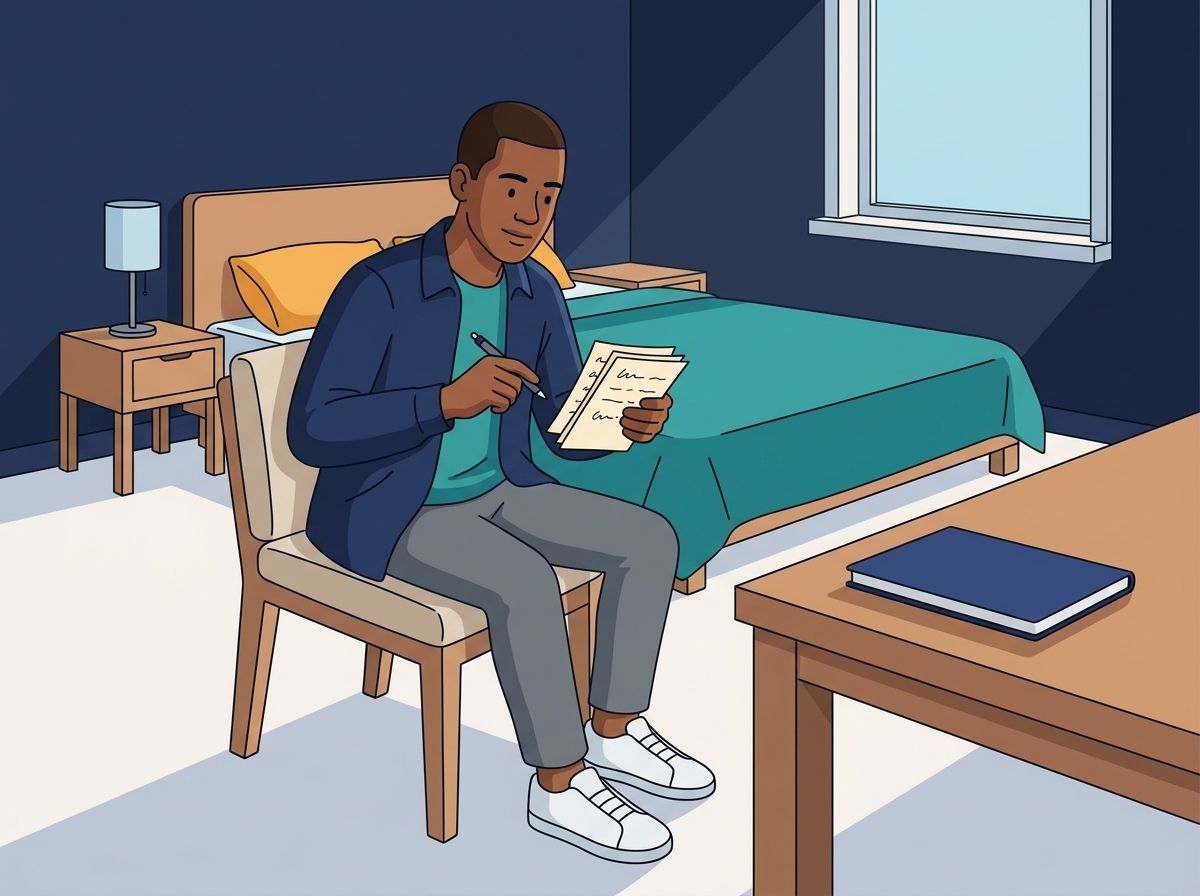
Andre knew the story. A teammate had missed a key handoff, and Andre had helped repair the process without turning the conversation into a blame session. He also knew what he wanted an interviewer to understand: he could stay calm, name the problem, and help the team move forward. That was enough. The polished paragraph was not helping.
Why memorizing an interview answer can make you sound less natural
A memorized answer gives you a narrow path. If the interviewer asks the exact question you expected, you may feel steady, but if they add a follow-up, rephrase the prompt, or pause in a way you did not predict, that path disappears fast.
Your brain then has to choose between reciting the old answer and actually answering the new question. That tiny mismatch is what makes your voice flatten. You rush. You repeat phrases. You stare at the camera while hunting for the next sentence you remember.
This does not mean you are bad at interviews. It means your practice method asked you to remember a performance instead of your own experience.
Interviewers usually do not need a perfect speech. They need enough detail to understand what you did, how you made choices, and what happened next. A natural answer can still be clear and organized. It just has some breathing room.
Before you practice, give yourself permission to sound like a person thinking carefully. A brief pause is not a failure. Saying, "Let me think about the best example," is not a failure either. Most people would rather hear a considered answer than watch you sprint through a paragraph you memorized at midnight.
What makes an interview answer sound rehearsed?
An answer often sounds rehearsed when it has several of these signs:
- Every sentence has the same rhythm.
- You use broad phrases without a specific example.
- You force the story to match a question it does not really answer.
- You keep speaking after you have made your point.
One polished phrase is not the problem. The problem is losing contact with the question and the person asking it.
How to practice interview answers with a flexible structure
A flexible structure gives you support without boxing your answer in. You can use the familiar situation, action, result pattern, but treat it as a set of notes rather than a script.
Start by choosing one real example from your work, school, volunteer experience, caregiving, community work, or personal projects. The example does not need to be dramatic. A small process improvement can show judgment more clearly than a heroic rescue story.
Write down four anchors:
- The situation: what was happening and why it mattered.
- Your responsibility: what was yours to handle.
- Your action: the choices you made and why.
- The result: what changed, including what you learned.
Then say the answer using only those anchors. Do not look at full sentences. If you lose your place, look at the next idea and continue. You are teaching yourself to retrieve the story, not perform a recording.
For Andre's conflict example, his notes might look like this:
- A project handoff was missed before a client deadline.
- Andre owned the next step and needed information from a teammate.
- He asked what had blocked the handoff, reset the checklist, and confirmed a new owner.
- The deadline was met, and the team added a short handoff check to future projects.
That outline can become several natural answers. For "Tell me about a conflict," Andre might focus on the conversation. For "Tell me about a time you improved a process," he might focus on the new checklist. For "How do you handle missed deadlines?" he might explain how he balanced urgency with curiosity.
The facts stay the same. The emphasis changes.
A five-minute interview answer practice loop
You do not need a perfect home studio or a three-hour preparation block. Try this short loop instead:
- Read the question once and pause for five seconds.
- Speak from four anchor words, not a written paragraph.
- Listen for one place where you became vague or rushed.
- Say the answer again with one small adjustment.
Stop after the second attempt unless you have a clear reason to continue. Repeating an answer ten times can make the words stiff again. Your goal is not to remove every pause. Your goal is to make the important details easier to find.
How to sound natural in an interview when you need structure
Natural does not mean unprepared. It means your preparation is flexible enough to follow the conversation.
One useful approach is to change the conditions each time you practice. Answer while standing once. Answer while looking at your notes once. Answer with a shorter time limit. Ask someone to interrupt you with a follow-up question. Small changes help you practice recovery, which is a real part of any interview.
You can also practice the beginning and ending of an answer more than the middle. A clear opening helps the interviewer understand the point. A clean ending helps you stop before the answer starts wandering.
Try openings like these:
- "A useful example was a project handoff that went wrong."
- "The situation I think about most is when our deadline changed suddenly."
- "I handled that by clarifying the risk before choosing an action."
- "The result was not just a faster fix. We changed the process afterward."
These are starting points, not lines you have to recite. Use your own words. If a phrase feels unnatural in your mouth, replace it.
When you finish the main point, stop. Silence may feel longer to you than it does to the interviewer. You can also close with, "That experience shaped how I approach similar problems now," then let the other person decide whether they want more detail.
What should you do when you lose your place?
Pause, name the thread you are returning to, and continue with the next true detail. You can say, "The part that mattered most was how we reset expectations," or, "Let me come back to the action I took."
A recovery phrase is not a sign that you failed. It is a practical tool for keeping an answer honest and focused. Add a few to your practice notes:
- "Let me give you the clearest example."
- "I want to be precise about my role."
- "The result was mixed, and here is what I learned."
- "I would approach one part differently now."
That last kind of honesty can be especially useful. You do not need to pretend every decision worked perfectly. You need to explain what you saw, what you did, and what you would carry forward.
How to practice interview answers without losing your own voice
Your voice is not a distraction from your qualifications. It is part of how the interviewer understands your judgment, your communication style, and how you work with other people.
Start with your normal vocabulary. If you never say "leveraged cross-functional synergies" in real life, do not force it into an answer because it appeared in a preparation guide. Clear language usually makes specific experience easier to hear.
Record one answer on your phone, then listen once without judging your personality. Notice only useful signals:
- Did you answer the question asked?
- Could a listener tell what you personally did?
- Did you include one concrete detail?
- Did you explain what changed or what you learned?
You may notice habits like saying "like," speaking quickly, or starting every answer with "So." You do not need to erase all of them. Pick one habit that actually gets in the way and work on that one. Humans have verbal habits, interviewers do too, and nobody needs you to sound like a navigation system with a blazer.
It also helps to practice with a real listener. Ask them not to grade you. Ask them to repeat the main point they heard. If they cannot tell what you did, add one detail. If they can repeat your point but your answer took four minutes, trim the setup.
If you are practicing alone, use a short written prompt instead of a full script. Keep these nearby:
- What was the problem?
- What was my role?
- What choice did I make?
- What happened afterward?
Updraft's free interview-readiness check can review one spoken or typed interview answer and offer grounded feedback plus a practical next step. It does not judge your whole job search or predict whether you will be hired. You can try it at https://app.updraft.careers/start. Further Readback practice depends on your available plan allowance.
The point is not to outsource your voice. The point is to get a second look at whether your answer is clear, specific, and connected to the question.
A simple practice plan for the week before an interview
If your interview is several days away, avoid cramming every possible question into one long session. Choose a small set of experiences that can answer different kinds of questions.
Your examples might include:
- A time you solved a difficult problem.
- A time you received feedback.
- A time you worked through disagreement.
- A time you learned something quickly.
For each example, make a four-anchor note. Then practice answering a few variations. You are building range, not memorizing a catalog.
A manageable plan could look like this:
- On day one, choose four examples and write the anchors.
- On day two, speak each answer once without a script.
- On day three, add follow-up questions and practice pausing.
- On interview day, review keywords and stop studying early enough to rest.
That final step matters more than people expect. Tired preparation often turns into anxious over-talking. Give your brain a chance to store the stories without one more frantic rehearsal in the parking lot.
And if the interview is tomorrow, use the smaller version. Choose two examples. Practice the opening, your role, the result, and one recovery phrase. That is useful preparation too.
FAQ
How many times should I practice an interview answer?
Practice an answer two or three times in one session, then return to it later with fresh attention. More repetition is not always better because memorizing exact wording can make your delivery stiff. Focus on remembering the story and its key details.
Should I write out my interview answers word for word?
Writing a full draft can help you understand your point, but do not use it as your main practice tool. Reduce the draft to four or five keywords so you can speak naturally and adjust to the question.
How can I sound natural in an interview when I am nervous?
Pause before you answer, breathe out slowly, and begin with the clearest true point you have. Use a short structure with the situation, your role, your action, and the result. Nervousness may still show, and that does not make your answer unconvincing.
What if I do not have the exact experience an interviewer asks about?
Say that you have not handled that exact situation, then offer the closest relevant example and explain what carries over. Do not invent experience. A truthful answer with clear reasoning is stronger than a perfect story that falls apart under a follow-up question.
The night before an interview, Andre did not memorize the conflict story again. He looked at four words on a sticky note: handoff, question, checklist, lesson. Then he closed the laptop.
You can do the same. Choose one real story, reduce it to a few anchors, and practice saying it in more than one way. Leave space for the person in front of you. That space is where your preparation starts to sound like you.
Join the conversation
Subscribe to comment
Join Updraft's newsletter to leave a comment and get new posts in your inbox.