The AI résumé red flags hiring managers notice first
AI can help you build a stronger résumé, but hiring managers notice the shortcuts. Learn how to check an AI résumé before it costs you a real chance.
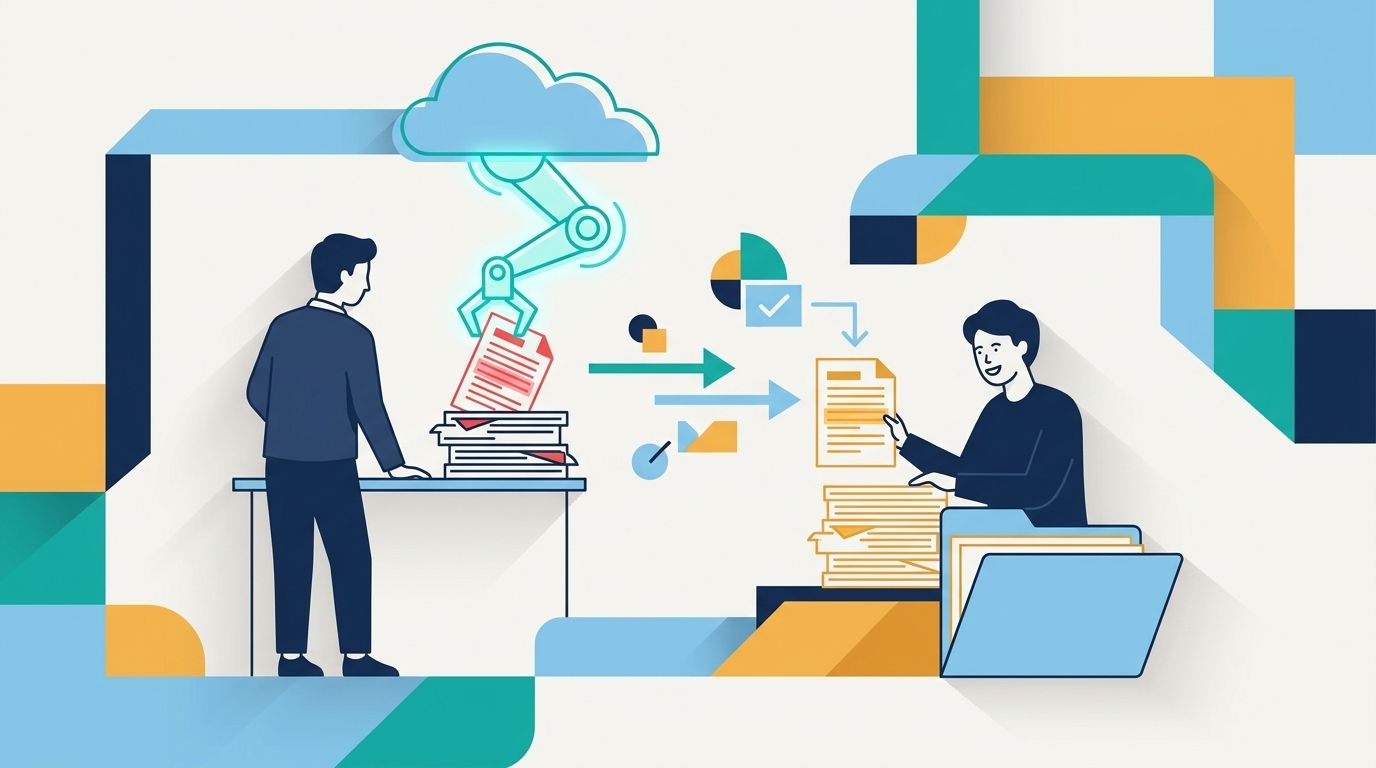
Andre Whitaker stared at the résumé on his kitchen table and read the same sentence for the fourth time: "Results-driven professional leveraging cross-functional synergies." He had used AI to help revise his résumé, but the words sounded nothing like him.
The biggest AI résumé red flags are generic language, inflated claims, copied job-posting phrases, and details you cannot explain in an interview. You can avoid these AI generated résumé mistakes by checking every sentence against your real work, your speaking voice, and the evidence you can actually provide.
That does not mean you did something wrong by using AI. Job searching is exhausting, and sometimes you need help turning scattered experience into a clear document, especially after a layoff, a career change, a long caregiving break, or months of rejection. The goal is not to avoid help. The goal is to keep your résumé honest and recognizably yours.

What hiring managers notice before they read closely
A hiring manager may spend only a short time deciding whether your résumé deserves a closer look. They are not always hunting for proof that AI wrote it. They are looking for signals that the document is vague, overstated, or disconnected from the role.
The first red flag is language that could describe almost anyone. Phrases like "results-oriented team player," "strategic thought leader," and "dynamic professional" take up space without telling the reader what you actually did. AI reaches for these phrases because they sound polished in isolation. Hiring managers have seen them hundreds of times.
The second red flag is a résumé that mirrors the job posting too neatly. If every bullet echoes the employer's own wording, the document feels copied rather than tailored. Real tailoring shows you understand the work. It should not make you sound like a job description with a pulse.
The third red flag is a sudden shift in voice. Your summary may sound formal and grand while your experience bullets use plain, specific language. Or one section may run long and abstract while the rest reads like a normal person describing their day. That unevenness signals a document that was assembled, not reviewed.
Watch for these early signals:
- A summary that could fit five different careers.
- Bullets with impressive verbs but no clear action or result.
- Repeated phrases like "spearheaded," "leveraged," or "optimized" with no evidence attached.
- Skills that appear in the document but never show up in your actual experience.
- A polished tone you would never use in an email or interview.
A résumé does not need to sound casual. It does need to sound credible. If a hiring manager asks how you "optimized stakeholder alignment," you should be able to answer without translating your own résumé first.
Why does generic language hurt an AI résumé?
Generic language makes it harder for a hiring manager to see your actual contribution. It also creates doubt, because broad claims are difficult to verify, compare, or discuss once you are sitting across the table.
Try replacing the claim with a concrete description. "Improved customer experience" is weak on its own. "Rebuilt the support email templates and reduced repeat questions by 18% over one quarter" gives the reader something real to hold, assuming the number is accurate and you can explain how you measured it.
You do not need a dramatic achievement for every bullet. A clear task, a specific setting, a named tool, or a real outcome can make ordinary work useful to a reader. "Scheduled appointments for a 12-person clinic and handled insurance questions" tells a stronger story than "managed administrative operations."
The AI generated résumé mistakes that create trust problems
The most serious AI generated résumé mistakes are not awkward phrases. They are false or unsupported details. An AI tool may suggest a number, a software platform, a degree, a job title, or a responsibility because it predicts what usually appears in a résumé. It does not know whether that detail applies to you.
That is where the risk gets personal. A false claim can reach a recruiter, a hiring manager, or a background check. And even when nobody checks formally, an interviewer may ask a simple follow-up that exposes the gap.
Review every detail that falls into one of these categories:
- Numbers: revenue, savings, growth, response time, team size, or performance percentages.
- Credentials: degrees, licenses, certifications, courses, and technical tools.
- Scope: budgets, direct reports, regions, customers, or project ownership.
- Dates: employment months, promotions, contract periods, and career gaps.
- Results: awards, launches, rankings, process improvements, or business outcomes.
AI can also turn a small contribution into a leadership claim. You may have helped test a new process, and the draft says you "led enterprise-wide implementation." You may have supported a presentation, and the draft says you "presented strategic recommendations to executive leadership." Those are not harmless upgrades. They change what you are claiming to have done.
Use the "prove it" test. For each major statement, ask yourself:
- What exactly did I do?
- What evidence could I show or describe?
- Who else worked on it?
- What part was mine, and what part belonged to the team?
If you cannot answer those questions, soften or remove the claim. "Supported the launch of" may be more accurate than "owned the launch." Accurate language protects you. It also gives an interviewer a better opening to understand your real value.
A short résumé gap does not need a fictional explanation. A modest job title does not need a bigger one. Your actual experience has more texture than an invented success story, even when it feels less impressive at first glance.
How to check an AI résumé before you send it
Knowing how to check an AI résumé matters because proofreading is not enough. A document can be grammatically clean and still be misleading, bland, or poorly matched to the role.
Start with a source check. Pull up your original résumé, notes, performance reviews, project documents, or calendar records. You do not need to dig through your entire career history, just focus on the statements that carry the most weight, especially numbers and claims about ownership.
Then read the résumé aloud. This catches language that looks professional on a screen but feels strange in your mouth. If you stumble over a sentence or would never say it to a colleague, rewrite it in your own words.
Next, compare the résumé with the job posting. Look for real overlap, not copied wording. If the posting asks for vendor management and you coordinated invoices, tracked delivery problems, and escalated issues, say that. Do not claim contract negotiation unless you actually negotiated contracts.
Use this review pass for each experience bullet:
- Is the action clear?
- Is the context specific enough?
- Is the result real, or is it only implied?
- Is the language proportional to my role?
- Would I be comfortable discussing this in an interview?
After that, remove repetition. AI may use the same idea in your summary, your skills section, and every job entry. Repetition makes the résumé longer without making your case stronger. Keep the version that gives the clearest evidence and cut the rest.
Finally, ask another person to read it without your explanation. Ask what they think you did, what seems unclear, and which sentence sounds least like you. You do not need a professional résumé writer. A former coworker, a friend, or a trusted family member can often spot a claim that feels too big. (I have seen a single honest read-through catch more problems than three rounds of solo editing.)
If you use Updraft to tailor a résumé, treat the draft as a starting point you review, not as a final authority. The tool works from the history you provide, and its honesty check is designed to block invented employers, titles, dates, degrees, and numbers before you see a tailored draft. You still make the final call. You know what happened.
AI résumé risks that are easy to miss
Some risks are obvious. A made-up degree is easy to understand as a problem. Other risks are quieter and can still weaken your application.
One is over-tailoring. A résumé that repeats every keyword from the posting may pass a basic scan but feel unnatural to a person reading it carefully. Good tailoring changes emphasis. It does not turn every bullet into a mirror of the employer's language.
Another is flattening. AI may strip out the details that show how you actually solved problems. It can replace "I built a spreadsheet to track late deliveries across four locations" with "streamlined logistics operations." The second line sounds more polished, but the first one shows judgment, scale, and initiative.
A third risk is hiding a career change. If you are moving from retail into office operations, or from teaching into customer success, generic language can erase the bridge between your past and your goal. Your résumé needs to make that connection visible. It can name what you did, identify which skill carries over, and explain why the new role makes sense.
Watch for these signs that AI has polished away too much of you:
- Your work sounds bigger but less specific.
- Every bullet begins with a high-powered verb.
- The document has no small details, tools, constraints, or tradeoffs.
- Your career change is less clear after editing.
- You would need to memorize the résumé before an interview.
Your résumé is not supposed to tell your whole life story. It is supposed to help the right reader understand what you can contribute next. That requires judgment, not just smooth sentences.
Should you remove all signs that AI helped write your résumé?
No. You do not need to hide reasonable editing help. The important question is whether the final résumé is accurate, specific, and understandable to you.
Review every suggested claim, remove unsupported details, and rewrite language that does not sound natural. If an employer asks about your process, you can be honest that you used a tool to organize or edit your materials while keeping responsibility for the content.
What is the safest way to use AI on a résumé?
Give the tool accurate source material, ask it to preserve facts, and review every output before you send it. Use AI for structure, clarity, brainstorming, and comparison, but do not let it invent achievements or make your role sound larger than it was.
It also helps to keep a personal evidence file. Save project names, tools, outcomes, dates, positive feedback, and examples of problems you solved. That file gives you better raw material to work from and reduces the chance that a tool fills gaps with guesses.
A kinder standard for your next application
You may be tired of hearing that you need to "stand out." Sometimes that advice makes job searching feel like a performance contest, where every bullet needs a bigger number and every job title needs a shinier description.
You are allowed to write a résumé that is clear instead of flashy. You are allowed to describe support work as support work. You are allowed to explain a career break without turning it into a motivational speech. None of that makes you less qualified.
The strongest application usually gives a hiring manager a simple reason to keep reading: this person has done related work, understands the problem, and can explain their contribution. AI can help you make that case. It cannot take responsibility for whether the case is true.
Before you submit, save ten quiet minutes for a final honesty check. Read each bullet aloud, circle every number, and mark any phrase you would struggle to explain. Then make the smallest changes that bring the document back to your real voice.
That is enough for today. You do not need a perfect résumé. You need one that tells the truth clearly and gives the right employer a fair chance to recognize you.
FAQ
What are the biggest AI résumé red flags?
The biggest AI résumé red flags are vague language, copied job-posting phrases, unsupported numbers, inflated responsibilities, and a voice that does not sound like the applicant. A résumé can be grammatically perfect and still raise concern if the writer cannot explain its claims.
Can hiring managers tell when a résumé was written by AI?
Sometimes, but there is no reliable visual test that proves AI use. Hiring managers are more likely to notice generic wording, repeated phrases, unusual claims, or details that do not match the candidate's answers in an interview.
How can I fix AI generated résumé mistakes?
Compare every claim with your original records and real experience. Remove invented details, replace vague phrases with specific actions, and read the résumé aloud to check whether it sounds like you.
Is using AI for a résumé dishonest?
Using AI for organization, editing, or brainstorming is not automatically dishonest. It becomes risky when the tool adds facts you cannot support or expands your contribution into something larger than it was. You remain responsible for reviewing and approving the final document.
Join the conversation
Subscribe to comment
Join Updraft's newsletter to leave a comment and get new posts in your inbox.